Water Filtration in Broomfield, CO
Most people start looking at water filtration in Broomfield, CO for one of two reasons: the water tastes or smells like something they would rather not drink, or they want to know exactly what is in it before it reaches the glass. Filtration is the taste-and-contaminant service. Depending on the system, it targets chlorine taste and odor, sediment, and specific contaminants identified by testing, either at a single drinking-water tap or for the whole house.
When you call, we connect you with an independent local plumbing provider who can discuss testing, explain what different systems actually remove, and install the one that matches your concern. Our guide to hard water in Broomfield covers the related local water condition many homeowners ask about at the same time.
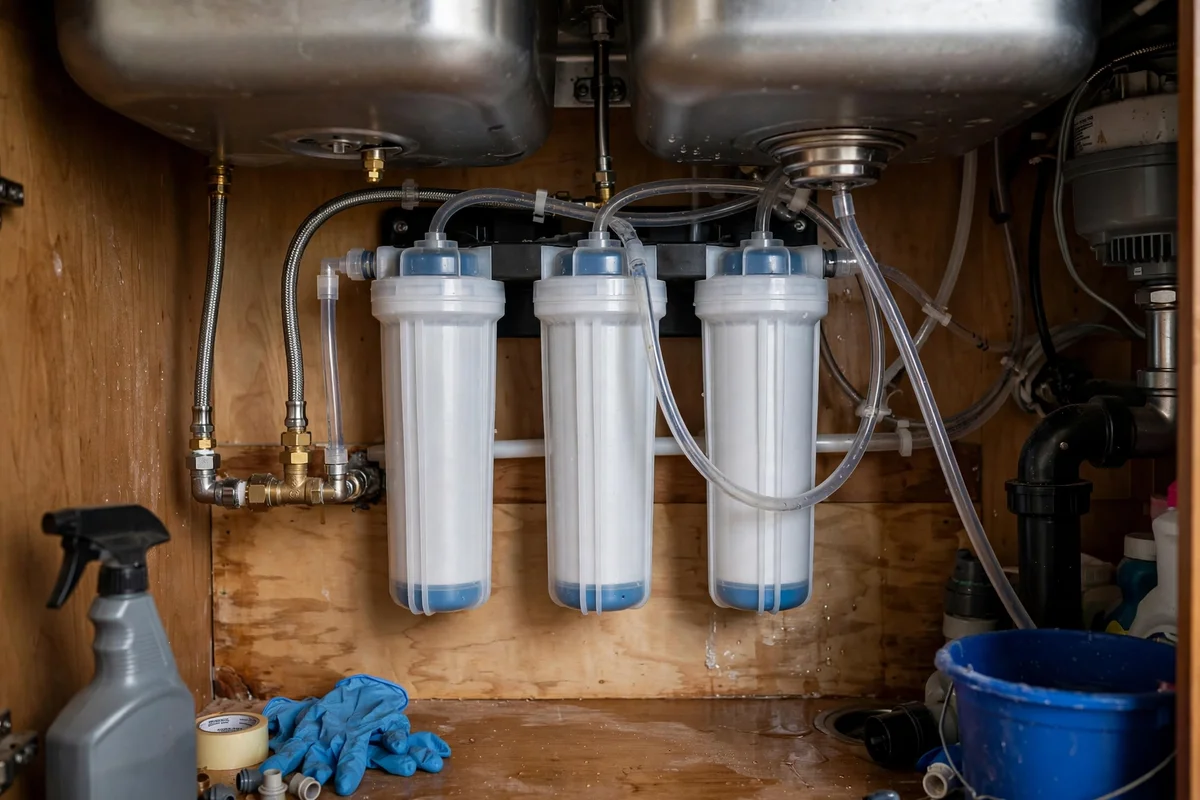
Start With the Problem: Taste, Odor, or a Specific Concern
Filtration works best when the system is chosen for a defined problem. A chlorine taste or smell at the tap is the most common complaint and is handled by carbon filtration, either in an under-sink unit dedicated to a drinking-water faucet or in a whole-house system. Sediment — fine particles that cloud water and clog aerators — calls for sediment filtration ahead of other stages. A concern about a specific contaminant should start with testing, because different contaminants need different media, and no single residential filter removes everything.
A provider should be straight with you about that last point. Any claim that one system handles every possible contaminant is a claim to be skeptical of. The reasonable process is: identify what you want removed, confirm it with a test where that matters, choose a system rated for that target, and keep up with cartridge changes so it keeps performing. Ask the provider to put what the system is and is not rated for in plain language before you agree to an installation.
Point-of-Use and Whole-House: The Main Choice
Point-of-use systems treat water at one location, most often an under-sink unit feeding a dedicated faucet at the kitchen sink, sometimes with a line to the refrigerator. They are the focused answer to drinking and cooking water quality, with lower upfront cost and cartridges you change on a schedule the provider will explain. Whole-house systems treat every tap, which suits a concern that extends to showers and laundry, at higher cost and with more substantial installation on the main line.
Neither is automatically better; they answer different questions. If your only complaint is drinking-water taste, a whole-house system is likely more than you need. If the concern is whole-home exposure, an under-sink unit leaves every other tap untreated. A provider can lay out both against your actual concern and your home's plumbing layout, including where the main line enters and what space is available.
Filtration Is Not Softening
This distinction decides whether you buy the right system, so it is worth stating plainly. Filtration targets taste, odor, sediment, and specific contaminants. It does not remove the calcium and magnesium that cause hard-water scale, so a filter alone will not stop crusting on fixtures or scale inside a water heater. Softening does the opposite: it removes hardness minerals and does not function as a contaminant filter. Our full explainer on hard water in Broomfield walks through the local scale problem in detail.
If scale is your main issue, the relevant service is water softener installation. If taste or a tested contaminant is the issue, filtration is the tool. Plenty of Broomfield households have both concerns and run both systems, each doing the job the other cannot — a provider who tests first can tell you whether you need one, the other, or both.
Want drinking water you actually like the taste of? Call and we will connect you with an independent local provider who can match a filtration system to your concern.
Get Help 24/7 — (720) 731-0573Areas We Serve
We connect homeowners across Broomfield with independent local providers for water filtration, including in these areas:
Frequently Asked Questions
What is the difference between water filtration and a water softener?
Filtration targets taste, odor, sediment, and specific contaminants. A softener removes calcium and magnesium to stop hard-water scale. Neither does the other's job, and some homes use both. A provider can test your water and tell you which problem, or problems, you actually have.
Should I choose an under-sink filter or a whole-house system?
An under-sink point-of-use system treats drinking and cooking water at one tap and costs less to install and maintain. A whole-house system treats every tap, including showers and laundry. The right choice depends on whether your concern is limited to drinking water or extends to the whole home.
Do I need a water test before choosing a filtration system?
For taste and odor concerns, a test is helpful but the remedy is often standard carbon filtration. For a specific contaminant concern, testing first is the sensible step, because different contaminants require different filter media and no single filter removes everything.
How often do filtration cartridges need changing?
It depends on the system type, your water usage, and the manufacturer's rating for the cartridge. A provider will give you the change schedule for the specific system installed. Letting cartridges run far past their rating reduces performance, which is why the schedule matters.
Better-Tasting Water Starts With the Right System
Call today and we will connect you with an independent local provider for water filtration in Broomfield, CO.
Get Help 24/7 — (720) 731-0573