Water Quality · 5 min read
Hard Water in Broomfield: What It Does to Your Plumbing
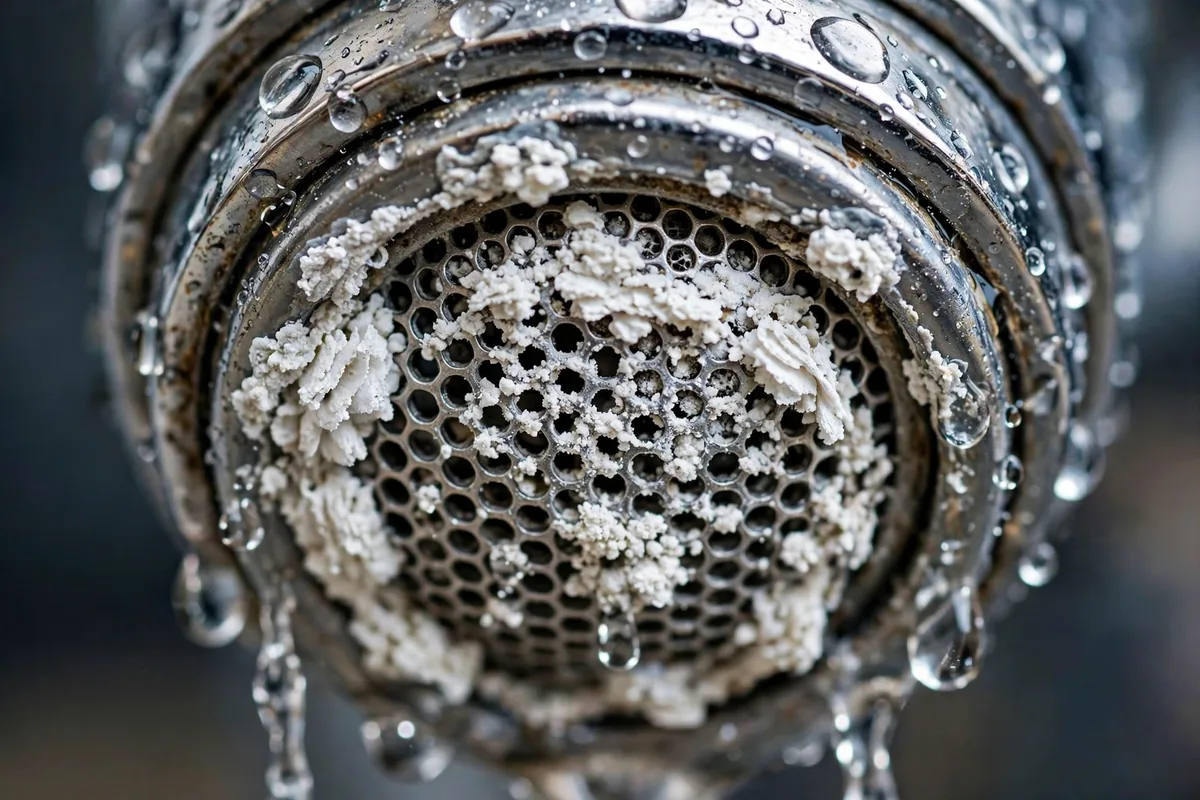
Hard water is one of those local conditions Broomfield homeowners live with so completely that they stop seeing it — the white crust on the faucet, the spots on the glassware, the water heater that rumbles a little louder each year. It is also a genuine plumbing issue with a cost attached, which is why the question shows up in local providers' Broomfield FAQs. This guide explains what hard water is doing inside your plumbing, where the damage concentrates, and how the two common responses — softening and filtration — actually differ.
Why Broomfield water is hard
Hardness is dissolved calcium and magnesium picked up as water moves through mineral-bearing ground and rock before it ever reaches the treatment plant. Front Range water supplies draw on mountain and plains sources that carry a meaningful mineral load, and Broomfield is no exception. The water is treated and safe to drink; hardness is an aesthetic and mechanical problem, not a safety one. But minerals that are invisible in a glass of water behave differently when that water is heated, evaporated, or left sitting in a pipe — which is to say, constantly, in every home.
When hard water is heated, the dissolved minerals come out of solution and form scale: a hard, chalky deposit that clings to heating elements, tank walls, aerators, showerheads, and the inside of pipes. Evaporation leaves the same deposit behind on fixtures and glass. Scale is cumulative. A home does not notice it in month one; it notices in year eight, when flow has narrowed, the heater works harder, and fixtures that once wiped clean now need scrubbing or replacement.
What scale does inside pipes and fixtures
Inside supply pipes, scale narrows the passage water moves through. The effect is gradual pressure and flow loss that homeowners often blame on the city supply or on a failing regulator, when the actual cause is buildup at fixtures and in older pipe runs. Aerators and showerheads clog first because their fine openings trap scale fastest — unscrewing and cleaning an aerator is a legitimate first diagnostic step when one faucet runs weak while the rest of the house is fine.
Fixtures suffer cosmetically and mechanically. Scale crusts around faucet bases and handles, stiffens cartridge movement, and spots everything it dries on. Appliances with water connections — dishwashers, washing machines, refrigerator ice makers — accumulate the same deposits in their valves and lines. None of this is dramatic, and that is the point: hard water damage is a slow tax on nearly every water-using component in the house, which is why addressing it at the whole-home level is worth considering for Broomfield homes rather than fighting fixture by fixture.
Water heaters and hard water
The water heater is where hard water does its most expensive work. In a tank unit, scale-forming minerals settle as sediment on the bottom of the tank, directly over the burner. The burner then heats through an insulating layer of sediment, which wastes energy, overheats the tank bottom, and produces the familiar rumbling and popping sounds as water trapped in the sediment flashes to steam. Over years, that cycle shortens tank life and is a common reason heaters in hard-water areas fail earlier than their counterparts elsewhere.
Tankless units are not immune; their narrow heat-exchanger passages are sensitive to scale coating, which is why manufacturers specify water quality limits and periodic descaling. Anode rods in tank heaters also deplete faster in some water conditions, removing the tank's corrosion protection sooner. Regular flushing reduces sediment, but in genuinely hard water it manages the problem rather than solving it. That distinction is what leads many homeowners in areas like The Broadlands and Westlake Village to treat the water itself.
Want a local provider to look at this in person?
Get Help 24/7 — (720) 731-0573The daily signs homeowners notice
Long before pipes narrow, hard water announces itself in daily life. Soap scum that clings to tubs and shower doors. Laundry that feels stiff and looks dull. Spots and film on dishes straight out of the dishwasher. Dry-feeling skin and hair after showering, because mineral residue interferes with soap rinsing. Limescale rings in kettles and toilet bowls. Individually each sign is a nuisance; together they are a reliable fingerprint that your water carries a significant mineral load.
It is worth separating hard water signs from other problems. Low pressure at every fixture including outdoor spigots points more toward supply or pressure-regulator issues than scale. Rusty or discolored water is a different problem entirely, usually corrosion or a failing tank. Hard water's signature is white or chalky deposits plus gradual flow loss at fixtures — when that is what you are seeing, treating the water addresses the cause.
Softening vs filtration: different jobs
A water softener installation addresses hardness directly: a conventional softener exchanges calcium and magnesium for sodium (or potassium), so the water arriving at your fixtures no longer forms scale. This is the treatment that protects pipes, heaters, and appliances from the damage described above. Homeowners typically notice the daily signs easing as well, because softened water rinses soap properly.
Water filtration solves different problems: taste, odor, chlorine, and sediment or specific contaminants, depending on the filter type. Filtration does not remove hardness minerals in standard configurations, and softening does not purify water. Many Broomfield homes reasonably choose one; some choose both, softening for the plumbing's sake and point-of-use filtration for drinking water taste. The right call starts with identifying which problem you actually have — scale and its damage, taste and odor, or both — and matching the treatment to it, rather than buying a system that treats a problem you do not have.
If you are unsure which problem you have, a water test settles it. Testing confirms hardness level and screens for other characteristics, so a recommendation can be matched to measured water rather than to symptoms alone. Broomfield homeowners who have lived with scale for years often assume it is simply how water is; the test, and the difference treated water makes to a water heater's workload, usually reframes it as what it is — a solvable condition with a calculable cost on both sides. Treat the water, and the plumbing stops paying the tax.
Frequently asked questions
Can hard water damage a tankless water heater faster?
Yes. Tankless heat exchangers have narrow water passages that coat with scale in hard water, reducing efficiency and eventually triggering faults or failure. Manufacturers commonly require water below a stated hardness level or periodic descaling to keep warranty coverage. If you have or are considering a tankless unit in Broomfield, ask about descaling intervals and whether softening is recommended for your water.
Does a water softener remove the need for filtration?
No, because they treat different things. A softener removes hardness minerals that form scale; it does not remove chlorine taste, odors, sediment, or most contaminants. Filtration handles those. If your only concern is scale damage to plumbing and appliances, a softener alone answers it. If drinking water taste also bothers you, a filter at the kitchen tap is the usual complement.
How can I tell if low pressure is scale or something else?
Check the pattern. If one faucet is weak, clean its aerator first — scale clogging is likely. If the whole house is weak including hose bibs, suspect the pressure regulator or supply instead. Gradual flow loss over years at multiple fixtures, alongside visible white deposits, points to scale. A plumber can test pressure and inspect fixtures to separate the causes in one visit.
Need a plumber in Broomfield?
Tell us what is going on and we will connect you with an independent local plumbing provider who can help.
Get Help 24/7 — (720) 731-0573