Leak Detection in Broomfield, CO
A hidden leak announces itself sideways: a water bill that jumps without explanation, the faint sound of running water when nothing is on, a warm or damp patch with no spill to explain it. Leak detection is the find-it step — using acoustic and thermal technology to pinpoint where the water is escaping, without opening walls on a guess. We connect Broomfield homeowners with independent local providers who specialize in locating leaks.
Signs You Have a Hidden Leak
The most common trigger is the water bill. A steady climb, or a sudden spike with no change in habits, usually means water is going somewhere it should not. Other tells: the water meter dial moving when every fixture is off, mildew smell in a room that stays dry on the surface, paint bubbling or flooring that feels soft or warped, and low pressure in one part of the house. In Broomfield's slab-on-grade homes, a hot-water line leaking under the slab can even create a warm spot on the floor.
Left alone, a small leak does outsized damage — soaked insulation, rotted subfloor, mold growth inside wall cavities. The cost of finding a leak early is a fraction of repairing what months of hidden water does. If two or more of these signs sound familiar, detection is the right next move, not waiting to see if it gets worse.
How Non-Invasive Leak Detection Works
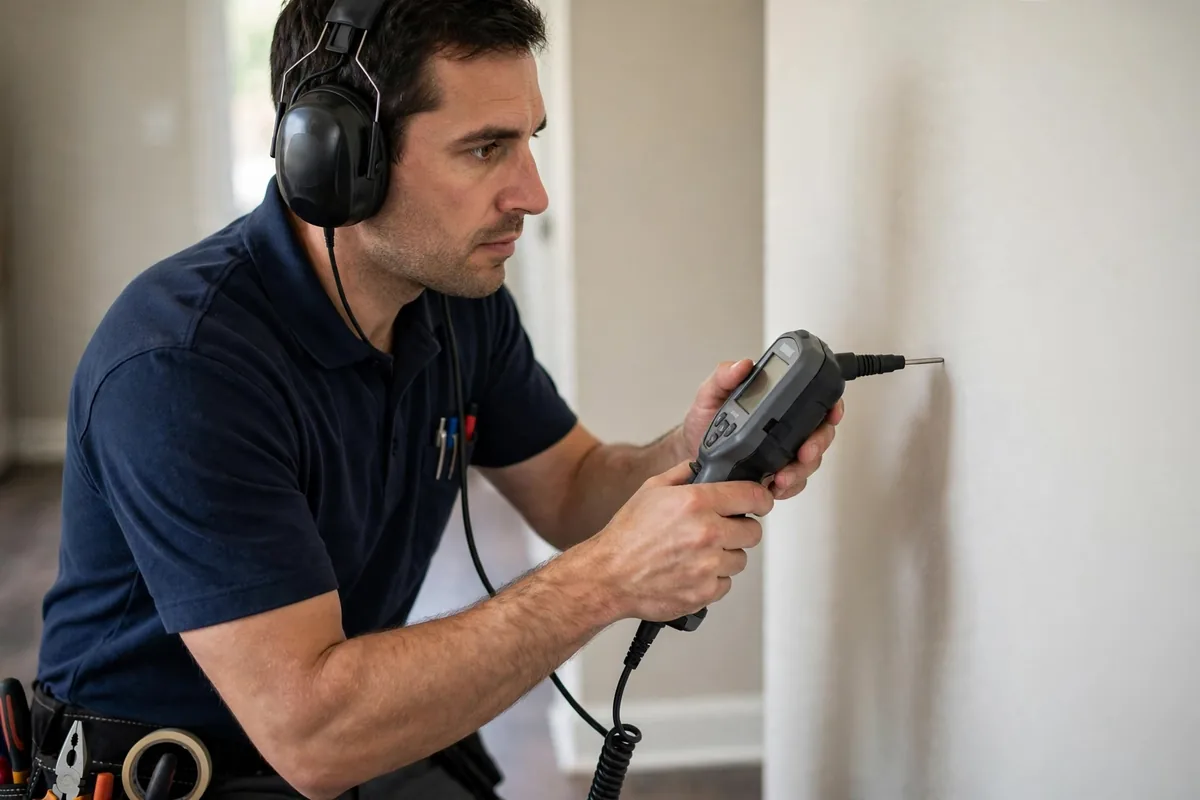
Providers locate leaks by listening and measuring rather than demolishing. Acoustic equipment amplifies the sound pressurized water makes as it escapes a pipe, and a trained technician traces that sound through walls, floors, and soil to its source. Thermal imaging cameras show temperature differences on surfaces — a hot-water leak lights up as a warm trail, and moisture cools differently than dry material. Moisture meters confirm how far water has spread, and pressure testing isolates which line or zone is losing water.
Used together, these tools narrow a whole house down to a specific spot, often within inches. That precision is the entire point: instead of cutting open a wall to search, the repair that follows opens only the small area where the leak actually is. For leaks under concrete, the same acoustic approach feeds our slab leak detection and repair service, and suspected main-line problems route to water line repair.
Water bill climbing for no reason? Call and we will connect you with an independent provider offering leak detection in Broomfield.
Get Help 24/7 — (720) 731-0573Detection Finds It — Repair Fixes It
One honest boundary: leak detection is about finding leaks, and detection alone does not stop the water. Once the provider has pinpointed the source and shown you the evidence, the fix itself is a separate step — that is what our water leak repair service is for. Some providers handle both in one visit; others diagnose and quote the repair on the spot. Either way, detection comes first, because repairing the wrong section of pipe wastes money and leaves the real leak running.
When you call (720) 731-0573, tell us the signs you are seeing — the bill spike, the sound, the damp spot. That detail helps us connect you with an independent provider equipped for diagnostic work, so the visit starts with locating the leak rather than guessing at it.
Related Services
Areas We Serve
We connect callers with independent providers across Broomfield and nearby communities, including:
Frequently Asked Questions
How does a plumber find a leak without opening walls?
With acoustic listening equipment that amplifies the sound of escaping water, thermal imaging that reveals temperature changes from moisture, and moisture meters that map where water has spread. Together they pinpoint the leak's location before any cutting happens.
How long does leak detection take?
A typical residential detection visit takes one to two hours, depending on the size of the home and how many lines need testing. Slab and main-line leaks can take longer to trace.
Will leak detection find a slab leak?
Yes. Acoustic equipment can trace pressurized leaks through concrete, and thermal imaging often shows the warm path of a leaking hot-water line under the slab. Slab-specific work is covered on our slab leak page.
What should I do while a leak is being located?
If you can do so safely, shut off water to the affected fixture or area, move belongings away from damp spots, and avoid running water on the suspect line. Do not open walls yourself — the detection visit will identify the exact spot first.
Think You Have a Hidden Leak?
Call now and we will connect you with an independent local plumbing provider for leak detection in Broomfield, CO.
Get Help 24/7 — (720) 731-0573