Regulations · 5 min read
Colorado's 2026 Water Heater Law: What Broomfield Homeowners Must Know
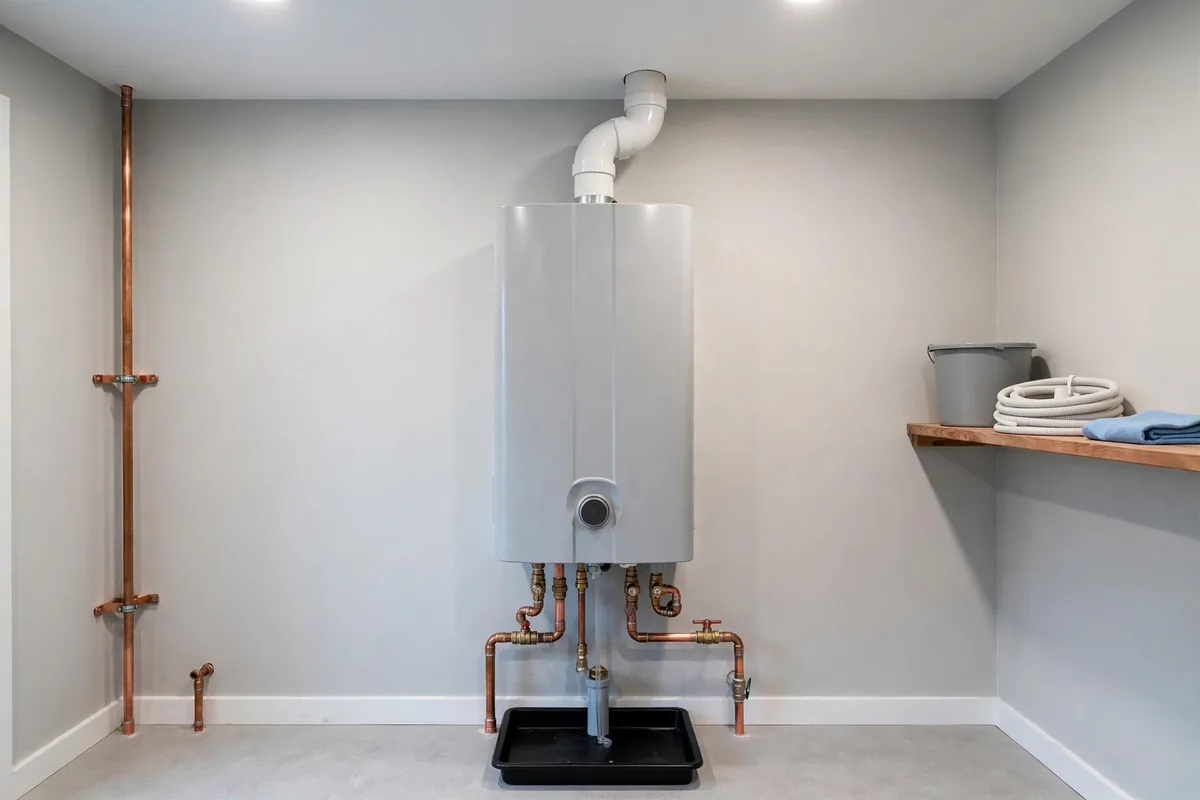
If your water heater is more than a decade old, a Colorado rule taking effect for 2026 replacements deserves a place in your planning. Reporting on the rule describes a shift to ultra-low NOx requirements for new gas water heaters, with direct effects on what a replacement costs and which models are available. The rule comes from Colorado House Bill 23-1161, the official bill text published by the Colorado General Assembly. This guide explains what has been reported, keeps clear what is reported coverage versus settled detail, and lays out the practical choices for Broomfield homeowners. Because rules and enforcement details can be updated, confirm the current requirements with your installer and the City of Broomfield before you buy.
What the 2026 rule is, as reported
As reported by Big Apple Plumbing (bigappleplumbing.net), a Broomfield-area provider that has covered the rule in detail, Colorado's 2026 water heater requirements center on ultra-low NOx emissions for new gas-fired water heaters. NOx — nitrogen oxides — are a byproduct of gas combustion, and ultra-low NOx burners are designed to cut those emissions substantially compared with conventional burners. The practical meaning for a homeowner is not the chemistry; it is that the replacement unit you buy in 2026 is a different, more engineered product than the basic gas heater installed in many Broomfield homes ten or fifteen years ago.
Reporting on the rule indicates it applies at the point of sale and installation of new units rather than requiring anyone to remove a working heater early. We describe it in those qualified terms deliberately: the authoritative source for what applies to your address is the current state and city code as your installer applies it. What is not in doubt, based on the reported coverage, is the direction of travel — gas water heating in Colorado is moving to cleaner-burning equipment, and replacement planning should assume it.
Who it affects, and who it does not
The rule matters most if you own a conventional gas tank water heater that will need replacement during or after 2026. That is a large share of Broomfield homes, including the big building cohorts in Anthem Highlands and Redleaf whose original heaters are now reaching end of life together. If your heater is electric, the gas-specific NOx requirement does not apply to it in the same way, though general efficiency and code requirements still shape any replacement.
It does not mean your working gas heater becomes illegal to use, and it does not mean a repair suddenly requires a full rule-compliant replacement in every case. Whether a given water heater repair remains straightforward depends on the fault, the unit's age, and parts availability. The homeowners most exposed are those whose heaters fail unexpectedly mid-winter: they will be choosing a compliant replacement under time pressure, with no hot water, which is the worst position from which to compare options.
Want a local provider to look at this in person?
Get Help 24/7 — (720) 731-0573What it does to cost and choice
Reported coverage of the rule expects two effects. First, compliant ultra-low NOx models cost more to manufacture than the basic conventional units they replace, so the entry-level price for a gas replacement rises. Second, the budget end of the gas range shrinks: the cheapest conventional models that do not meet the emissions standard drop out of the market, narrowing the spread between a basic gas install and higher-efficiency alternatives that once looked like a premium upgrade.
That narrowing changes the comparison homeowners should run. When basic gas was dramatically cheaper, many households replaced like-for-like without a second thought. With the gap smaller, it is worth pricing the alternatives at the same time — a higher-efficiency gas unit, a tankless water heater installation, or an electric option where the home suits it — over the full life of the unit, including energy use. Any water heater installation quote in 2026 should state plainly that the proposed unit meets the current Colorado requirements; if a quote is suspiciously cheap, ask which standard the unit meets.
Where tankless and electric fit in
Tankless units heat water on demand and avoid standby losses, and many modern gas tankless models are already built around low-emission burner designs. For households with steady, spread-out hot water use, tankless can be a strong fit; for homes with several simultaneous high-demand fixtures, sizing and possibly gas-line capacity need a proper assessment rather than an assumption. Electric tank and electric tankless options sidestep gas emissions rules entirely but shift the question to electrical panel capacity and running cost, which vary by home.
None of these choices is universally correct, which is why the rule's real effect is to make the replacement conversation worth having before the old unit fails. A planned replacement lets you compare compliant gas, tankless, and electric on equal footing, schedule the work in normal hours, and handle any venting or utility changes the new standard requires without a cold shower deadline.
What to do if your heater is aging
Start with the age and condition of what you have. Find the manufacture date on the rating label, and watch for the standard end-of-life signs: rusty water, rumbling or popping as sediment heats, moisture at the base, and recovery that no longer keeps up with the household. A heater showing those signs at ten-plus years is a candidate for planned replacement on your schedule, under the new rules, with quotes compared calmly.
If your heater is mid-life and healthy, the rule changes nothing urgent for you; maintain it, know the replacement landscape, and revisit when age or symptoms say so. Either way, treat breathless claims about the rule — in any direction — with caution, and anchor your decision in the reported requirements, a compliant written quote, and confirmation from the city where it counts. Rules like this reward the homeowner who plans one season ahead.
Frequently asked questions
Does the 2026 rule apply to tankless water heaters?
Reported coverage focuses on gas-fired water heating, and tankless gas units are part of that picture, though many current tankless models already use low-emission designs. The exact applicability depends on the final rule text and the specific model. Ask any installer quoting a tankless unit to confirm in writing that it meets current Colorado requirements.
Can I still repair my older gas water heater in 2026?
In most cases, yes. The reported rule concerns new installations and replacements, not a ban on repairing an existing unit. Whether repair is sensible depends on the fault, the heater's age, and parts availability. A leaking tank cannot be repaired and means replacement; a failed valve or burner component on a younger unit is usually a straightforward repair decision.
Should I replace my water heater before the rule takes effect?
Only if the heater is already near end of life. Replacing a healthy mid-life unit early just to beat a rule usually costs more than it saves. If your heater is ten-plus years old and showing symptoms, planning a compliant replacement now — on your schedule, with compared quotes — is the financially sound version of the same idea.
Need a plumber in Broomfield?
Tell us what is going on and we will connect you with an independent local plumbing provider who can help.
Get Help 24/7 — (720) 731-0573